©Stacy Ratel
September 24, 2025
A Tribute to a Tireless Father
- as seen by -
 Stacy Ratel
@back_yard_birdie
Stacy Ratel
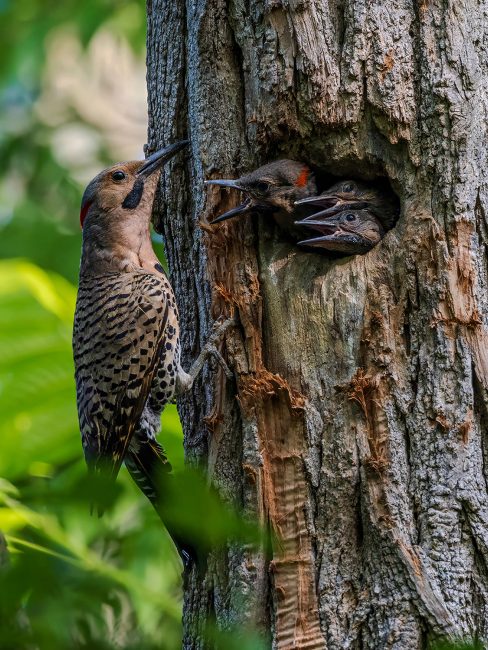
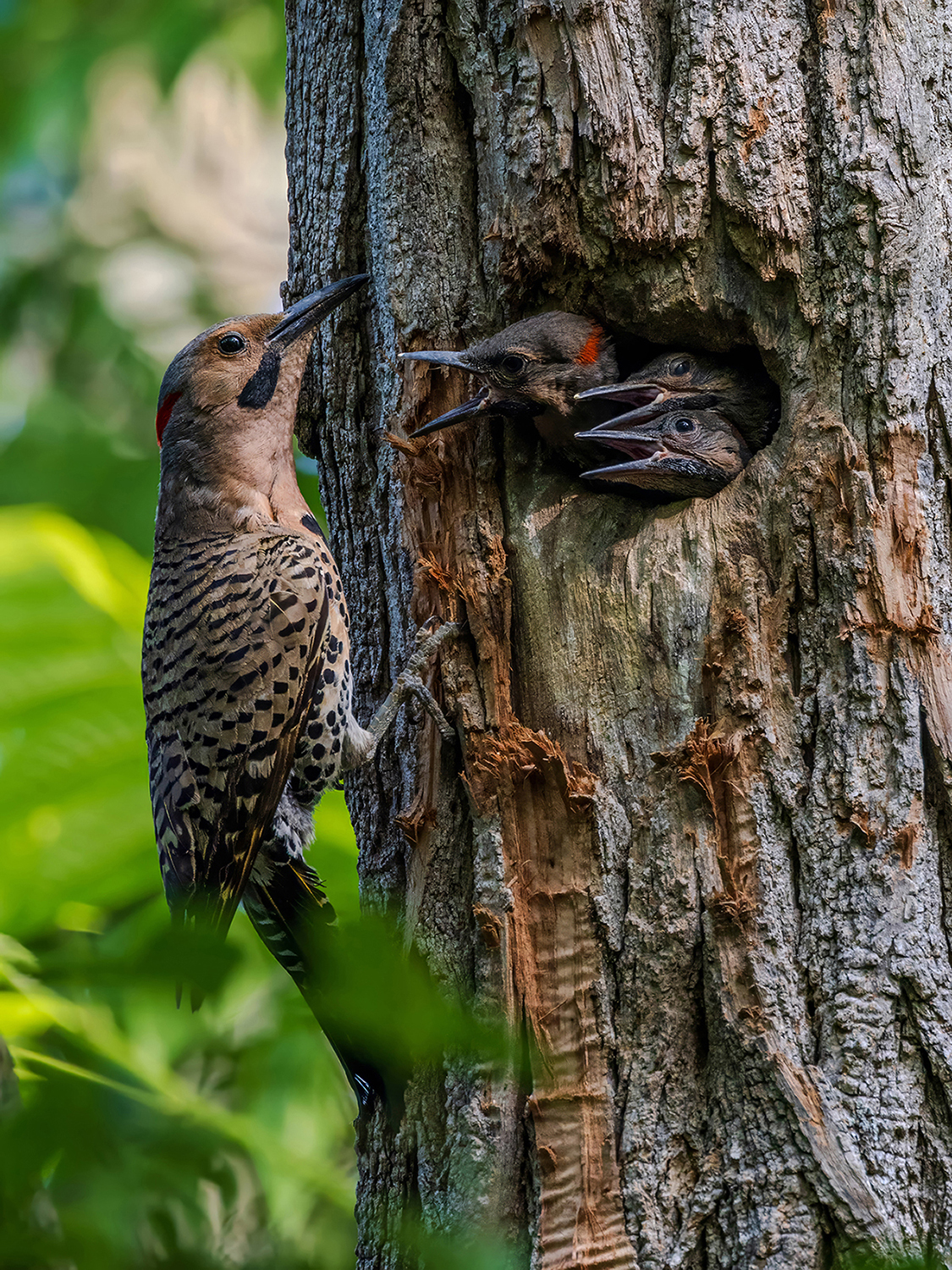
@back_yard_birdie Just after dawn, camera in hand, I crouched at a respectful distance beneath a snagged tree that had once echoed with the chattering calls of a red-bellied woodpecker family. Now, it belonged to another family, Northern yellow-shafted flickers, Colaptes auratus luteus, sometimes lovingly called yellowhammers, a name passed down through generations of eastern birders. These flickers wear their yellow underwings like sunlight tucked into feathers. They are woodpeckers, though you might not guess it right away. Their habits differ, often feeding on ants from the forest floor, and their voices are more musical than their hammering kin. And they gleam like gold.
This morning, I watched the male and female yellowhammers. A flicker of movement revealed the yellow flash of tail and black moustache of the father as he perched at the nest hole.
What made the scene remarkable, more than just the elegant exchange of food or the flutter of feathers, was what had unfolded over days of quiet observation. At first, I watched both parents trade off duties. The male and female flickers were a synchronized dance: one guarding, one gathering. I wouldn’t have known it without waiting and returning in those gentle hours just before the wind begins to stir the leaves, when the world still whispers and doesn’t yet shout.
At first, I didn’t see the chicks. But I practiced patience. I heard them—faint peeps from deep inside the hollow trunk. Then one day, they appeared, bobbing their heads out of their oval wooden window, eyes bright with hunger and curiosity. I found myself wondering: Do their parents coax them out with familiar chirps and cackles, unique sounds the chicks have already learned to recognize among the forest’s many voices?
But then… something changed. The female stopped appearing at the nest.
I kept returning, morning after morning, tucked quietly beneath the branches. The male came and went, tirelessly. He brought food, again and again, and I watched him remove the waste sacs (little encasements of chick excrement, known as fecal sacs) to keep the nest clean. He called softly before landing on his preferred branch.
I waited. Watched. Counted minutes between feedings.
Still, no sign of her. What had happened to the mother?
I wracked my brain. A peregrine falcon had perched nearby. Could she have been taken? Or was it the red-tailed hawk, majestic and merciless, with her own brood to feed? Could dehydration have struck her in this stretch of searing heat? Was there a hidden predator I’d missed—a raccoon, a snake, or even a silent cat?
Each theory circled my thoughts like the hawks above, but no clear answer landed. Only mystery, and a growing respect for the steadfast male who never stopped.
This story is not just about birds. It’s a testament to devotion. To instinct. And in the end, the chicks fledged.
I saw it—not guessed, not inferred. I watched their trembling wings catch the wind for the first time. Watched them hop from the nest hole and cling to the bark, learning the first steps of their new life.
The story could have ended differently, but it didn’t.
And all because he stayed.
So next time you hear a flicker’s call echo through the forest, think of him, the yellowhammer father under the summer sun, whose care took wing through the lives of three young birds, and of the power of observation to witness a world that often goes unseen.
Times like these remind us why wildlife conservation matters. Protecting habitats ensures that remarkable birds like the yellowhammer have safe places to nest, raise their young, and thrive.
Canon R5 with 100-500 lens and 1.4 extender
Comments
Martha
September 26, 2025 at 9:03 pm
What a wonderful story! Thanks so much for sharing.
Stacy Ratel
September 27, 2025 at 6:43 am
Thank you very much, Martha!