©Eric Januszkiewicz
August 28, 2025
Thermal Vision: A Rattlesnake’s Hidden Sense
- as seen by -
 Eric Januszkiewicz
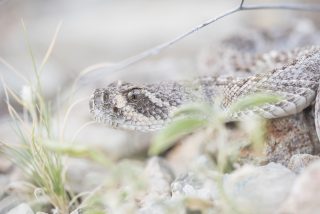
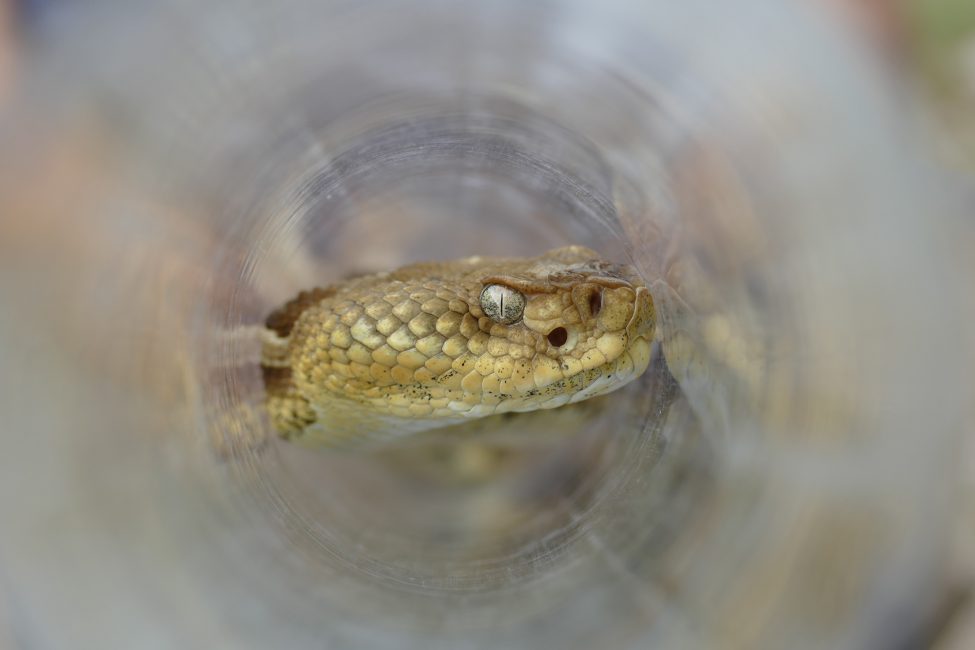
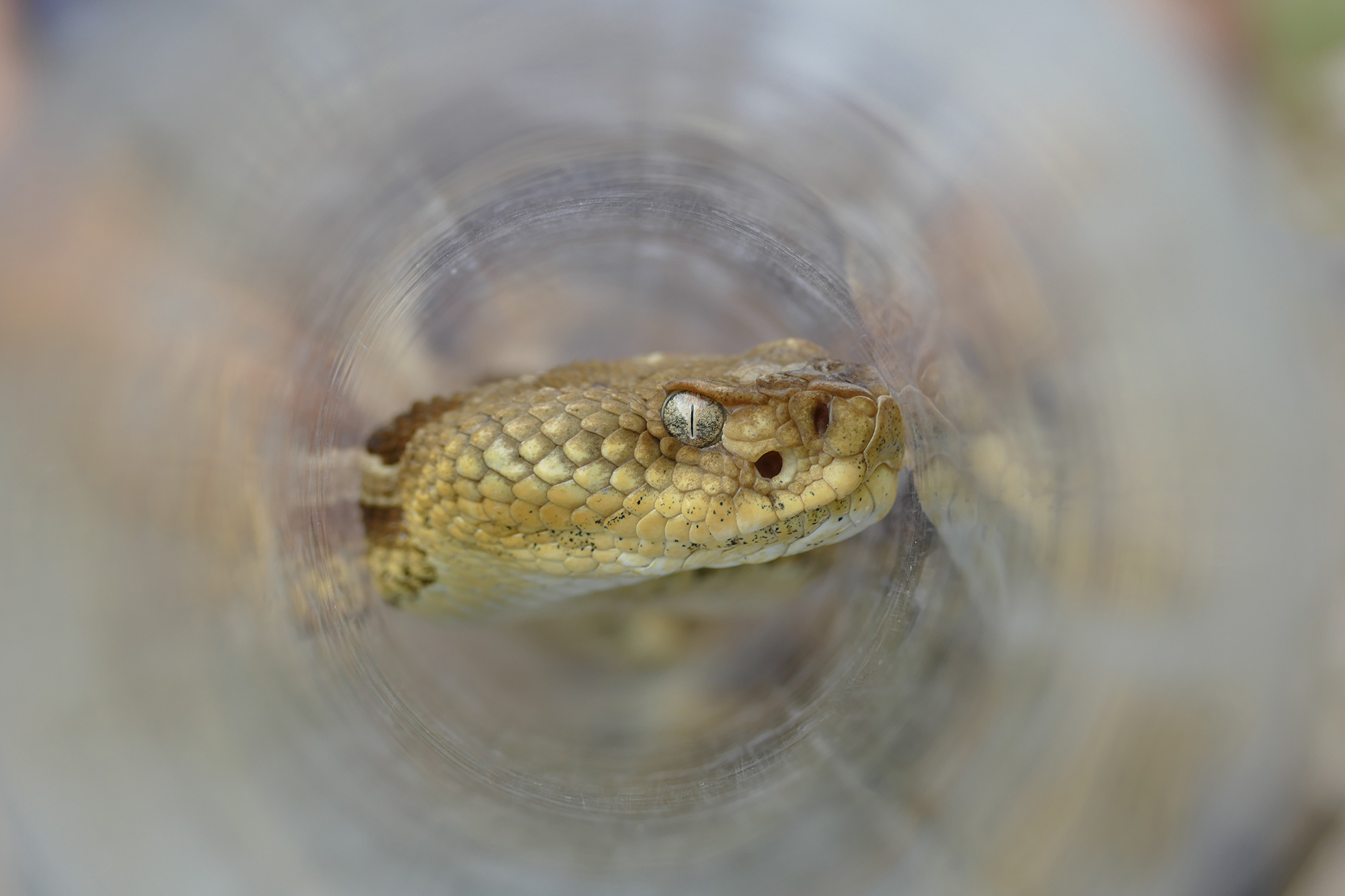
Pit vipers like this timber rattlesnake (Crotalus horridus) possess one of nature’s most remarkable sensory adaptations: the loreal pit, a deep heat-sensing organ located between the eye and nostril on each side of the head. These specialized pits allow the snake to detect infrared radiation, essentially letting it “see” the body heat of nearby animals.
Unlike eyesight, which can be limited by low light or camouflage, the loreal pits create a thermal image of warm-blooded prey with incredible accuracy. In fact, a timber rattlesnake’s strike is often guided more by heat than by sight, especially when hunting in the dark or in dense cover. These organs are so sensitive that they can detect temperature differences of less than a fraction of a degree.
This heat-detection system is critical to the snake’s survival, enhancing its ability to hunt, defend itself, and navigate its environment. It’s a stunning example of adaptation perfectly tuned for life as an ambush predator.
Panasonic FZ1000 II


Comments